
What Is GLP-1 Therapy? A Medical Weight Loss Approach in Wellington, FL

If you have struggled to lose weight through diet and exercise alone, you are not alone. Many adults deal with biological factors that make weight loss more difficult, including appetite changes, insulin resistance, hormonal imbalance, slow metabolism, and persistent cravings. That is why more people are asking an important question: What Is GLP-1 Therapy?
GLP-1 therapy is a physician-guided medical weight loss approach that uses medications designed to support appetite control, blood sugar regulation, and long-term metabolic health. For patients in Wellington, FL, this type of treatment can offer a more personalized path compared to traditional weight loss programs that rely only on willpower, strict dieting, or short-term restrictions. Insurance coverage can play a significant role in determining access to GLP-1 medications and may influence treatment decisions.
At New Age Health & Wellness, GLP-1 therapy is not treated as a quick fix. It is part of a comprehensive, medically supervised plan that may include health evaluation, bloodwork, medication management, nutrition guidance, lifestyle support, and ongoing progress monitoring.
What Is GLP-1 Therapy?
What Is GLP-1 Therapy? GLP-1 therapy uses medications that mimic or support the action of glucagon-like peptide-1, a natural hormone involved in appetite, digestion, insulin response, and blood sugar control.
GLP-1 stands for glucagon-like peptide-1. This hormone helps the body send signals that you are full, slows how quickly food leaves the stomach (slowing stomach emptying), and supports healthier blood sugar regulation. GLP-1 receptor agonists, also known as GLP-1 agonists, are medications that act on these pathways to help reduce hunger, promote feelings of fullness, and improve metabolic function. These medications were originally developed to treat Type 2 diabetes and are effective in lowering blood sugar by increasing insulin production and reducing glucagon release. You can learn more about the medical function of GLP-1 receptor agonists through the National Center for Biotechnology Information. GLP-1 medications are available as both injections and oral tablets, with each form approved for specific uses.
For weight loss, GLP-1 therapy is typically used as part of a broader treatment plan. GLP-1 therapy is part of a broader category of weight loss drugs that support metabolic health. The goal is not just to lower the number on the scale. It is to help patients build a more sustainable relationship with appetite, food intake, and metabolic health.
How GLP-1 Works in the Body
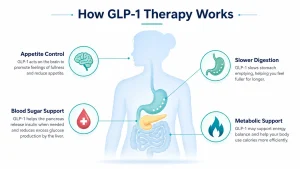
Understanding how GLP-1 works starts with appetite signaling. Many people who struggle with weight loss are not simply lacking discipline. Their body may be sending strong hunger signals, storing energy differently, or making it harder to feel satisfied after eating.
GLP-1 medications help by supporting several key functions:
- Appetite control: Patients may feel less hungry throughout the day.
- Satiety: Meals may feel more satisfying with smaller portions.
- Slower gastric emptying: Food stays in the stomach longer by slowing stomach emptying, which can help reduce frequent hunger.
- Blood sugar support: GLP-1 may help the body respond more efficiently to glucose.
- Reduced cravings: Some patients experience less “food noise” or fewer persistent thoughts about eating.
GLP-1s help control blood sugar levels by prompting the pancreas to release insulin after meals and suppressing glucagon. GLP-1s are a class of medications that support these processes.
This is why GLP-1 injections for weight loss can be helpful for qualified patients who have not had lasting success with standard diet plans. Instead of forcing the body through extreme restriction, GLP-1 therapy supports the biological systems involved in hunger and metabolism.
Types of GLP-1 Medications Used for Weight Loss
There are different medications used in medical weight loss, and the right option depends on the patient’s health history, goals, lab results, medication tolerance, and provider recommendation. Body mass index (BMI) is often used to determine eligibility for GLP-1 therapy and weight management programs.
Two commonly discussed treatment categories include:
Semaglutide Weight Loss
Semaglutide is a GLP-1 receptor agonist used in certain medications for weight management and blood sugar support. In a medical weight loss setting, semaglutide may help reduce appetite, support portion control, and improve consistency with lifestyle changes.
Other GLP-1 medications include liraglutide, which is available as an injection for Type 2 diabetes and in a different formulation for weight loss, and dulaglutide, which is approved only for Type 2 diabetes.
Tirzepatide Weight Loss
Tirzepatide works on both GLP-1 and glucose dependent insulinotropic polypeptide (GIP) pathways. GIP is a hormone involved in insulin secretion and fat storage, playing a significant role in blood sugar regulation after eating. Because tirzepatide acts on more than one pathway, it may be recommended for certain patients based on their medical profile and treatment goals.
Not every medication is right for every person. This is why a physician-guided approach matters. A provider can review your medical history, current medications, risk factors, and weight loss goals before recommending a treatment plan.
GLP-1 Therapy Benefits for Weight Loss and Metabolic Health
The most obvious reason people look into GLP-1 therapy is weight loss. However, the potential benefits may go beyond appearance or clothing size, supporting overall health through sustained weight loss and improvements in metabolic and cardiovascular markers.
Common GLP-1 therapy benefits may include:
- Reduced appetite
- Fewer cravings
- Better portion control
- Improved consistency with nutrition habits
- Support for blood sugar regulation
- Improved metabolic markers for some patients
- Better energy and mobility as weight decreases
- Reduced joint pain due to less stress on joints, which is especially helpful for those with arthritis
- More confidence in a structured medical plan
- Cardiovascular benefits, including improved heart health, reduced risk of cardiovascular disease, and a lower chance of major events like heart attack or stroke
- Slowed progression of chronic kidney disease and improved overall kidney health, particularly in patients with Type 2 diabetes
The National Institute of Diabetes and Digestive and Kidney Diseases explains that prescription weight loss medications are generally intended to be used along with healthy eating and physical activity, not as replacements for lifestyle habits. Research shows GLP-1 medications are most effective when combined with a healthy diet and regular physical activity. This is an important point for patients considering GLP-1 weight loss in Wellington FL. Medication can support progress, but long-term success still depends on sustainable habits.
Who Is a Good Candidate for GLP-1 Therapy?

What Is GLP-1 Therapy? For the right candidate, it is a medically guided tool that may help address weight and metabolic challenges, including obesity and weight management, that have not improved with lifestyle changes alone.
You may be a good candidate for GLP-1 therapy if you:
- Have struggled to lose weight despite diet and exercise
- Have obesity or weight-related health concerns, or need support with obesity and weight management
- Experience strong appetite, cravings, or frequent hunger
- Have insulin resistance or metabolic concerns
- Want a physician-guided plan instead of a generic diet program
- Are ready to combine medication with nutrition and lifestyle support
Weight control is an important part of the overall treatment plan for individuals considering GLP-1 therapy. A consultation with a healthcare provider is essential to determine if GLP-1 therapy is appropriate for your specific needs. At New Age Health & Wellness, patients can explore a personalized GLP-1 medical weight loss program that includes medical evaluation, treatment planning, and ongoing support.
Who Should Avoid GLP-1 Therapy?
GLP-1 therapy is not right for everyone. Some patients may need a different medical weight loss option depending on their health history, medications, or risk factors.
A provider may recommend avoiding or delaying GLP-1 therapy if you:
- Are pregnant, planning pregnancy, or breastfeeding
- Have certain gastrointestinal conditions
- Have a history of specific endocrine conditions
- Have had serious reactions to similar medications
- Are taking medications that may interact with treatment
- Have medical concerns that require further evaluation first
- Have a personal or family history of medullary thyroid cancer or Multiple Endocrine Neoplasia syndrome type 2 (MEN 2)
This is also why patients should not start GLP-1 medications without proper medical guidance. Online access and popular demand have made these medications more visible, but safe treatment still requires provider oversight. Always consult a healthcare provider before starting or stopping GLP-1 therapy to ensure it is appropriate and safe for your individual needs.
What to Expect During GLP-1 Medical Weight Loss in Wellington, FL
A responsible medical weight loss Wellington FL program should start with more than a prescription. It should begin with understanding your body, your goals, and your health history.
At New Age Health & Wellness, the process may include:
- Initial consultation to discuss goals, concerns, and medical background
- Symptom review and bloodwork to better understand metabolic health
- Doctor consultation to create a structured treatment plan
- Medication guidance based on your needs and response
- Ongoing follow-ups to monitor progress, side effects, and adjustments
- Nutrition and lifestyle support to help preserve muscle and support long-term results
Insurance coverage may affect your access to GLP-1 medications, so it is important to discuss this with your healthcare provider as part of your treatment planning.
This personalized approach helps ensure that treatment is not only focused on weight loss, but also on safety, sustainability, and overall wellness. Remember, the weight loss journey with GLP-1 therapy is a gradual process that involves ongoing support and collaboration with your healthcare provider.
How Long Does GLP-1 Take to Work?
Results vary from person to person. Some patients may notice appetite changes within the first few weeks, while visible weight changes may take longer. The timeline depends on dosage, consistency, lifestyle habits, starting weight, metabolic health, and how the body responds.
A typical GLP-1 therapy timeline may look like this:
- First few weeks: Appetite and cravings may begin to change.
- First 1 to 3 months: Patients may start seeing measurable weight changes.
- 3 to 6 months: More noticeable progress may occur with consistent treatment and lifestyle support.
- Beyond 6 months: The focus often shifts toward continued progress, metabolic improvement, and long-term maintenance.
Clinical studies report average weight loss as a percentage of body weight, and achieving sustained weight loss is a key goal of GLP-1 therapy.
The goal is steady progress, not extreme or unsafe weight loss. A good plan should be adjusted based on how your body responds.
GLP-1 Side Effects and Safety Considerations
Like any medication, GLP-1 therapy can cause side effects. The most common side effects of GLP-1 medications are gastrointestinal symptoms such as nausea, vomiting, diarrhea, and constipation. Other common side effects may include bloating, heartburn, decreased appetite, and fatigue during adjustment.
Rapid weight loss associated with GLP-1 medications can sometimes result in cosmetic changes such as ‘Ozempic face,’ characterized by sagging skin and wrinkles. Additionally, weight loss from GLP-1 therapy may lead to loss of muscle mass if not managed with proper nutrition and exercise.
Many side effects are mild and may improve as the body adjusts, but some patients may need dose changes or additional support. Less common but more serious side effects can include problems with the pancreas, stomach, intestines, gallbladder, or kidneys, which is why medical supervision is important.
Patients should contact their provider if they experience severe abdominal pain, persistent vomiting, signs of dehydration, allergic reaction, or symptoms that feel unusual or concerning.
GLP-1 Therapy vs Traditional Weight Loss Methods
Traditional weight loss programs often focus on calorie restriction, exercise, and general meal plans. While those habits are important, they may not address the biological reasons some people struggle to lose weight. Lifestyle medicine, a growing field, emphasizes a holistic, whole-person approach that combines medication with a healthy diet and behavioral changes to address the root causes of health issues and improve overall well-being.
GLP-1 therapy is different because it may help regulate appetite and metabolic signaling from inside the body. For many patients, this can make healthy habits easier to follow. GLP-1 therapy is also part of a broader category of weight loss drugs, such as Ozempic and Wegovy, used in medical weight management.
However, GLP-1 therapy should not be viewed as a replacement for lifestyle changes. The best outcomes often happen when medication is combined with:
- Protein-focused nutrition
- Healthy diet
- Strength training or regular movement
- Hydration
- Sleep support
- Stress management
- Long-term maintenance planning
This combination helps patients lose weight in a healthier and more sustainable way.
What Happens When You Stop GLP-1?
Some patients may regain weight after stopping GLP-1 therapy, especially if appetite returns and lifestyle habits are not well established. Stopping GLP-1 therapy can lead to weight regain if lifestyle changes are not maintained, as the reversal of weight loss effects is common without ongoing support. This does not mean the treatment failed. It means weight management is a long-term process, especially when metabolic factors are involved.
Before stopping treatment, patients should talk with their provider. A long-term plan may include dose adjustments, maintenance strategies, nutrition changes, fitness support, and continued monitoring.
At New Age Health & Wellness, the focus is not just losing weight. The focus is helping patients create a realistic plan for maintaining progress after active treatment.
Start GLP-1 Weight Loss in Wellington, FL
What Is GLP-1 Therapy? It is a medically guided treatment option that can help qualified patients manage appetite, support metabolic health, and work toward sustainable weight loss with professional oversight. Many GLP-1 medications used in medical weight loss are FDA approved for specific indications, ensuring their safety and efficacy. For more information on GLP-1 therapy and weight management, authoritative sources such as Harvard Health Publishing provide valuable guidance.
For adults in Wellington, FL, GLP-1 therapy may be a helpful option if traditional weight loss methods have not delivered lasting results. The key is choosing a provider who takes the time to understand your health, monitor your progress, and create a plan that fits your body.
If you are ready to explore a personalized approach to weight loss, contact New Age Health & Wellness today.
Start Your Personalized Weight Loss Plan
Frequently Asked Questions About GLP-1 Therapy
What is GLP-1 therapy and how does it work?
GLP-1 therapy uses medications that mimic the effects of a natural hormone involved in appetite, fullness, digestion, and blood sugar regulation. These medications help control blood sugar levels by stimulating insulin release, lowering blood sugar after meals, and preventing spikes that can occur when blood sugar rises too quickly. This not only helps patients feel full sooner, reduce cravings, and support healthier eating patterns, but also contributes to better overall glucose control.
How much weight can you lose with GLP-1?
Weight loss varies by person, medication, dosage, lifestyle habits, and treatment consistency. Clinical studies report average weight loss as a percentage of body weight, with results varying depending on the specific GLP-1 medication and individual factors. Some patients lose a meaningful percentage of their starting body weight over time, especially when GLP-1 therapy is combined with nutrition, movement, and ongoing medical support.
Is GLP-1 therapy safe?
GLP-1 therapy can be safe for appropriate candidates when prescribed and monitored by a qualified provider. It can support better blood sugar control, but should always be managed by a healthcare provider to ensure safety and effectiveness. It is not right for everyone, so a medical review is important before starting treatment.
Who is a good candidate for GLP-1 therapy?
A good candidate may be an adult who has struggled with weight loss, has obesity or weight-related health concerns, experiences strong appetite or cravings, or has metabolic issues such as insulin resistance. Individuals with high blood pressure or at risk for cardiovascular disease may also be considered for GLP-1 therapy. A consultation can determine whether treatment is appropriate.
How long does GLP-1 take to work?
Some patients notice appetite changes within the first few weeks. Weight loss may become more noticeable over several months, depending on the individual’s treatment plan, lifestyle, and metabolic response.
What happens when you stop GLP-1?
Some people may experience weight regain after stopping GLP-1 therapy if healthy habits are not maintained, as the weight loss effects can reverse when the medication is discontinued. A physician-guided maintenance plan can help support more sustainable results.
